How to Structure Your Trading Watchlist: Market Context Before Stock Picks

May 18, 2026
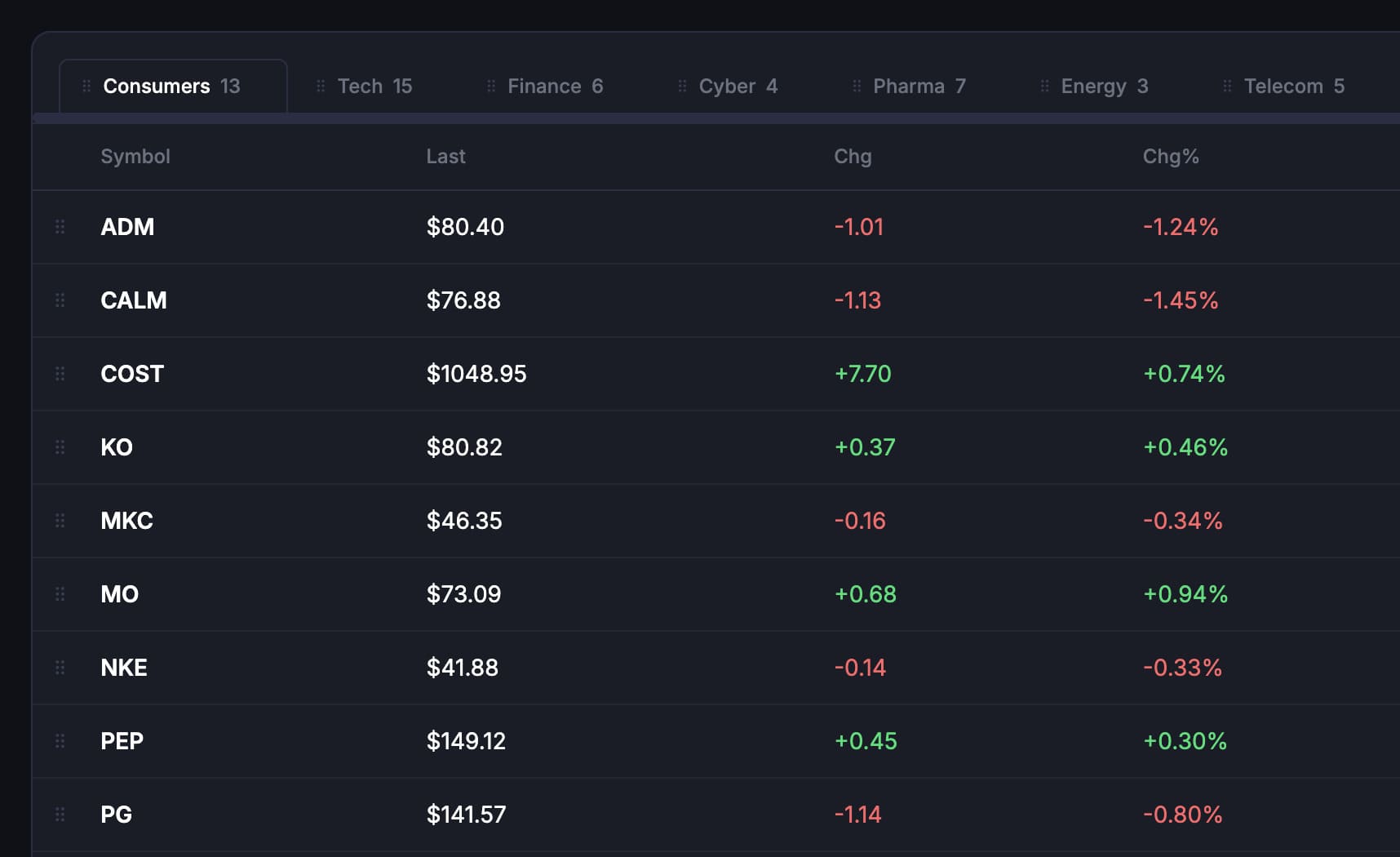
The majority of people build their watchlist by simply adding stocks they like. It seems obvious and harmless, but it’s actually a subtle mistake.
While your watchlist should help you track the companies you want to follow and trade, it should also give you an understanding of the global market status — or at least the specific industry. As the famous analyst Meredith Whitney (who forecasted the 2008 financial crisis) once said, it is simply not possible to evaluate a business without “zooming out” and comparing it to related, same-industry businesses.
For this very reason, the top of my watchlist usually includes:
- SPY: the most representative ETF of the market.
- QQQ: the most liquid ETF tracking the Nasdaq-100 Index — heavily weighted on tech companies.
- GLD: to keep the price of gold under observation.
- TLT: tracks the performance of long-term U.S. government bonds.
These four tickers alone give you a solid idea of the overall market sentiment. But if you want to go one step further, you can add:
- ES and NQ: which also track the SPY and QQQ but in the form of futures contracts (a financial derivative). Being traded 24/5, they react faster to any news or event — even when the US market is closed.
- CL: tracks the price of crude oil. Important because oil prices trigger a chain of events that impacts many other industries — transportation, commodities — and ultimately, inflation.
- VIX: a very important indicator that tracks the volatility of the SPY. If this makes no sense yet, we will soon dedicate a full blog post to VIX and its impact on options trading.
- Other futures and indexes based on what you like to trade.
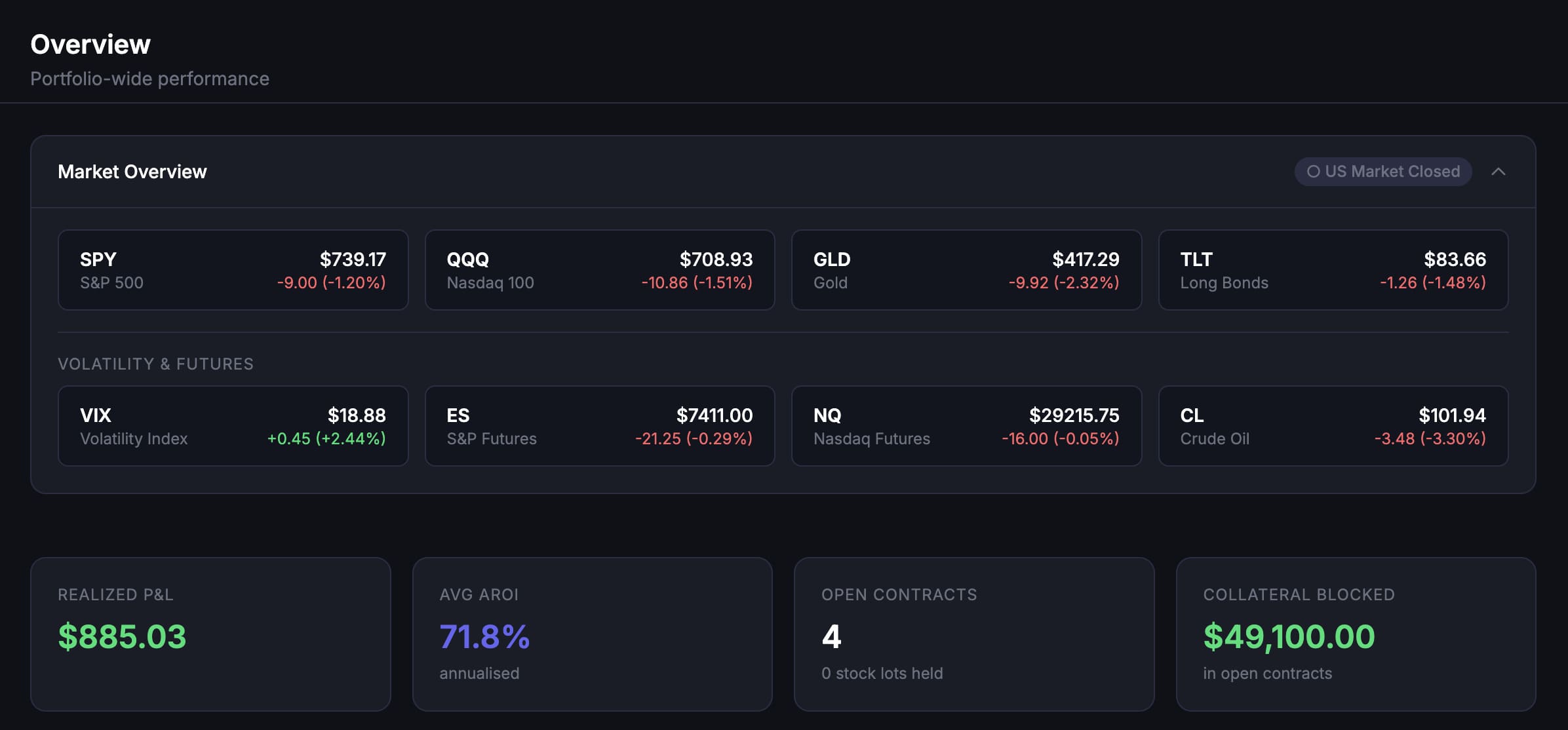
This is basically my go-to “first tab” watchlist — and it’s not a coincidence that it’s also at the top of Ctrl-Trade’s overview page :) You can replicate this in your broker’s watchlist or on TradingView, my go-to technical analysis tool.
Once you have this foundation in place, it’s time to add the stocks you want to track and trade. If you’re not sure where to start, here is a defensive strategy to get going:
- Stick to companies you trust — blue-chip names, dividend payers, businesses with long operating histories. If you can’t explain what it does in one sentence, skip it for now.
- Aim for an 80/20 split — roughly 80% stable, income-oriented names and 20% growth picks that may offer higher premiums but need more active management.
- Only add stocks you’d hold through a drop — if you wouldn’t want to own it during volatility, don’t put it on your watchlist. Assignment will happen eventually.
- Check options liquidity — tight bid/ask spreads, regular volume, monthly expirations available. This is a must have if you are trading options.
- Trade fewer names, more often — resist the urge to constantly hunt new tickers. Learning a handful of companies deeply and trading them repeatedly beats chasing novelty every time.
I personally also divide them by industry and sort them alphabetically, and I keep an eye on industry-specific ETFs for the very reason I explained at the beginning of this post: single stocks have to be contextualized. A few examples are:
- DBC for commodities
- XLE for energy
- XLV for health care
And many more.
Of course, this is only one of many ways to set up a well-designed watchlist. What makes sense to you is for sure the best fit. I know people trading a very small set of stocks with no segmentation, others segmenting by country or market cap. The rules are not set in stone.
It’s also worth mentioning that the above recommendations are valid for any trading activity — and even for a buy-and-hold strategy to monitor your holdings. A more sophisticated options trader could organise the watchlist with options-specific parameters like:
- Implied Volatility — how much the market expects a stock to move. Higher IV means fatter premiums for sellers.
- High Beta — stocks that move more than the market. More risk, but more premium opportunity.
- High Earnings Movements — stocks that tend to make big moves around earnings reports, creating volatility spikes worth targeting.
And maintain a shortlist to isolate the names showing “good momentum.”
If you don’t fully understand these yet — no worries. It will come with experience, and we’ll be covering each of them in detail in future blog posts.
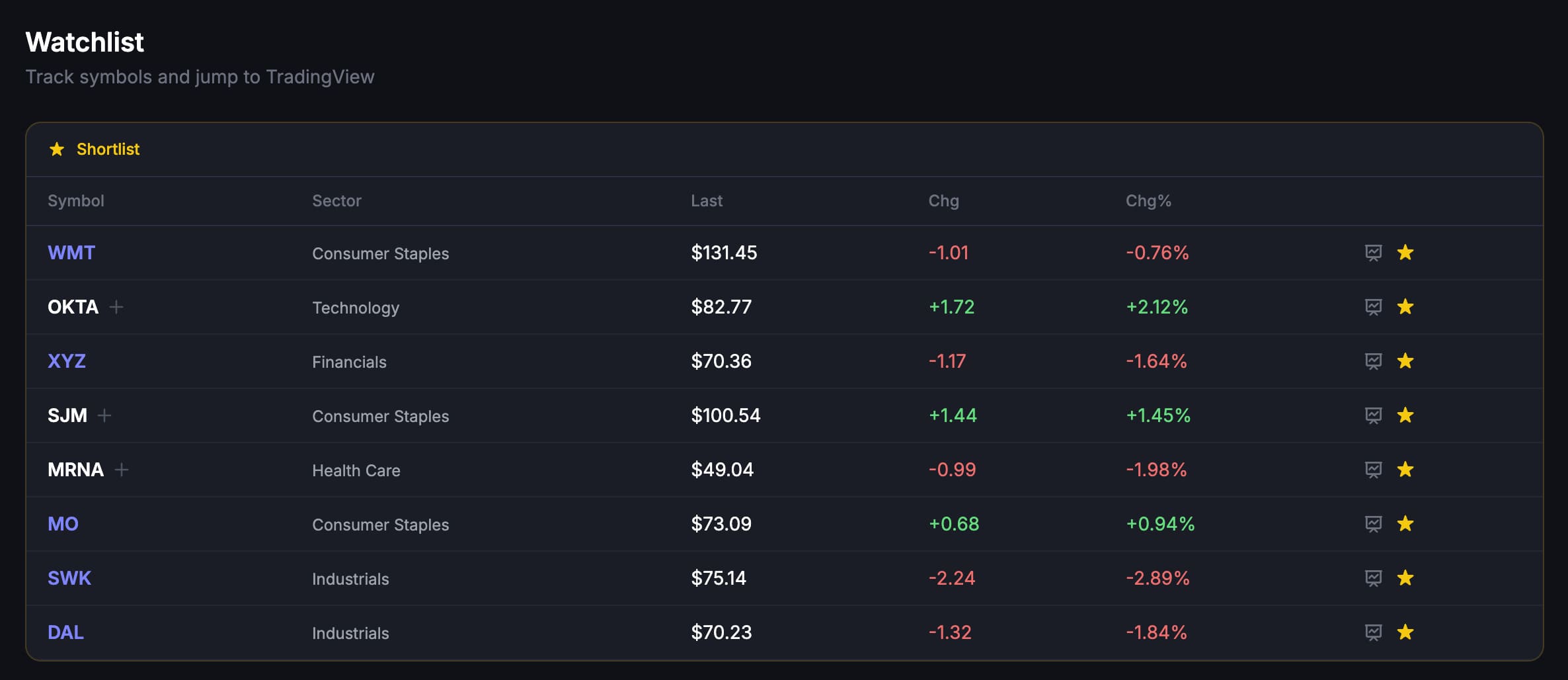
I hope this article gave you some clarity on how to organise your watchlist, why ETFs and futures are critical for a solid and helpful market overview, and maybe some inspiration to create yours right away.
Trade Well,
Francesco
Software Developer & Options Trader
Creator of Ctrl-Trade. A software developer of 15+ years who brings a programmer’s discipline — clear rules, data and backtesting — to options trading, and writes about what he learns in plain English.